Hello reader :) In this blog I am discussing Queer theory. What do Queer critics do? and some examples.
Queer studies
Definition :
an academic field of study focusing on matters relating to gender, human sexuality, and sexual orientation with emphasis on LGBT issues and culture.
Queer theory is often used to designate the combined area of gay and lesbian studies, together with the theoretical and critical writings about all modes of variance—such as cross-dressing, bisexuality, and transsexuality— from society’s normative model of sexual identity, orientation, and activities. The term “queer” was originally derogatory, used to stigmatize male and female same-sex love as deviant and unnatural; since the early 1990s, however, it has been adopted by gays and lesbians themselves as a noninvidious term to identify a way of life and an area for scholarly inquiry. See Teresa de Lauretis, Queer Theory: Lesbian and Gay Sexualities, 1991; and Annamarie Jagose, Queer Theory: An Introduction, 1996.
Both lesbian studies and gay studies began as “liberation movements”— in parallel with the movements for African-American and feminist liberation— during the anti-Vietnam War, anti-establishment, and countercultural ferment of the late 1960s and 1970s. Since that time these studies have maintained a close relation to the activists who strive to achieve, for gays and lesbians, political, legal, and economic rights equal to those of the heterosexual majority.
Lesbian and gay literary theory had emerged prominently as a distinct field only by the 1990s - there is nothing about it, for instance, in Terry Eagleton's Literary Theory: An Introduction (1983), or in the first edition of Raman Selden's A Reader's Guide to Contemporary Literary Theory (1985). As with women's studies twenty years before, the growing significance and acceptance of this new field is indicated by the presence of 'lesbian and gay studies' sections in some mainstream bookshops and publishers' academic catalogues, and by the establishment of relevant undergraduate courses, for which there is now a course reader, the Lesbian and Gay Studies Reader, published in 1993.
What lesbian/gay critics do
1. Identify and establish a canon of 'classic' lesbian/gay writers whose work constitutes a distinct tradition. These are, in the main, twentieth-century writers, such as (for lesbian writers in Britain) Virginia Woolf, Vita Sackville-West, Dorothy Richardson, Rosamund Lehmann, and Radclyffe Hall.
2. Identify lesbian/gay episodes in mainstream work and discuss them as such (for example, the relationship between Jane and Helen in Jane Eyre), rather than reading same-sex pairings in non-specific ways, for instance, as symbolising two aspects of the same character (Zimmerman).
3. Set up an extended, metaphorical sense of 'lesbian/gay' so that it connotes a moment of crossing a boundary, or blurring a set of categories. All such 'liminal' moments mirror the moment of selfidentification as lesbian or gay, which is necessarily an act of conscious resistance to established norms and boundaries.
4. Expose the 'homophobia' of mainstream literature and criticism, as seen in ignoring or denigrating the homosexual aspects of the work of major canonical figures, for example, by omitting overtly homosexual love lyrics from selections or discussions of the poetry of W. H. Auden (Mark Lilly).
5. Foreground homosexual aspects of mainstream literature which have previously been glossed over, for example the strongly homo-erotic tenderness seen in a good deal of First World War poetry.
6. Foreground literary genres, previously neglected, which significantly influenced ideals of masculinity or femininity, such as the nineteenth-century adventure stories with a British 'Empire' setting (for example those by Rudyard Kipling and Rider Haggard) discussed by Joseph Bristow in Empire Boys (Routledge, 1991).
Example
We studied Orlando as a text in over syllabus. This novel by Virginia Woolf breaks many things in society. And also we seen movie Vita and Virginia based both writers homosexual relationship.
Fire
This is 1996 movie director by Deepa Mehata Two woman who are in homo sexual relationship.
Badhaai Do
Shardul, a gay guy, and Suman, a lesbian woman, enter into holy matrimony to appease their families. However, when Suman's girlfriend moves in with them, their lives become more complex.
Four more shorts
Four unapologetically flawed women live, love, blunder and discover what really makes them tick through friendship and tequila in millennial Mumbai.Character of Umang singh represent homosexual identity in all series of this show.
Hello reader :) this is blog on Home and World by Ravindranath Tagore
Ravindranath Tagore
Rabindranath Tagore ( 7 May 1861 – 7 August 1941) was a Bengali polymath who worked as a poet, writer, playwright, composer, philosopher, social reformer and painter.He reshaped Bengali literature and music as well as Indian art with Contextual Modernism in the late 19th and early 20th centuries. Author of the "profoundly sensitive, fresh and beautiful" poetry of Gitanjali, he became in 1913 the first non-European and the first lyricist to win the Nobel Prize in Literature. Tagore's poetic songs were viewed as spiritual and mercurial; however, his "elegant prose and magical poetry" remain largely unknown outside Bengal.He was a fellow of the Royal Asiatic Society. Referred to as "the Bard of Bengal",Tagore was known by sobriquets: Gurudev, Kobiguru, Biswakobi.
About Activity
This is response as well as activity blog we studied Home and the World novel by Ravindranath Tagore as part of study we have one activity on that our teacher gave as one task we write poem, paragraph, anything in Gujarati, English, Hindi translate in Bengali and session by Expert we present our writeup.
My Write up
અનદેખી સાંકળે ઝકડી
રીતરીવાજે પકડી
અધમણ કપડે ઢાંકી
બીજાની ઈચ્છાએ મારી
તો ય એ જીવી
Interpretation
Feminist writers fight with culture and society for upcoming generation they are suffer alot that's why they are decided over next generation not suffering like us but sometimes I think that they having advantage to born in Europe not in India no doubt there are several Indian feminist writers but if Virginia Woolf was born as Vanita their writing burn and ashes of the book are thrown in river by our highly Sansakari peoples because in India baby girl by born they treated as a part of Patriachy if we are grown up and studies Feminism and at least one time we practice in our house it is like we are crossing over limitations In our Indian society we think women have freedom but actually we have no freedom becomes opened for women I think Indian want another 100years Or I think end of Universe India not open for women's Freedom. This space in India never possible for women.
Translation
একটি অদৃশ্য শিকল দ্বারা ধরা
প্রথায় ধরা পড়ে
একটি কাপড় দিয়ে ঢেকে দিন
অন্যের ইচ্ছায় খুন
তাই তিনি বেঁচে ছিলেন
Ēkaṭi adr̥śya śikala dbārā dharā
prathāẏa dharā paṛē
ēkaṭi kāpaṛa diẏē ḍhēkē dina
Google Translate
For Gujarati language they have a small space Google does not get proper word sometimes it is given as proper translation sometimes not.
Experts
We have online sessions with Budhidita Das Ma'am her mother tongue was Bengali we are one by one speak our translation in bengali and English she gave her review like my some classmates translation Google capture making correct bengali but some words Google not captured properly because it was a machine not human capture emotion as well.
Definition of Marxism: the political, economic, and social principles and policies advocated by Marx especially : a theory and practice of socialism (see SOCIALISM sense 3) including the labor theory of value, dialectical materialism, the class struggle, and dictatorship of the proletariat until the establishment of a classless society.
Marxist criticism:
Marxist criticism, in its diverse forms, grounds its theory and practice on the economic and cultural theory of Karl Marx (1818–83) and his fellow-thinker Friedrich Engels (1820–95), and especially on the following claims:
1. In the Marxist literary analysis, the evolving history of humankind, of its social groupings and interrelations, of its institutions, and of its ways of thinking are largely determined by the changing mode of its “material production”— that is, of its ovcz erall economic organization for producing and distributing material goods.
2. Changes in the fundamental mode of material production effect changes in the class structure of a society, establishing in each era dominant and subordinate classes that engage in a struggle for economic, political, and social advantage.
3. Human consciousness is constituted by an ideology—that is, the beliefs, values, and ways of thinking and feeling through which human beings perceive, and by recourse to which they explain, what they take to be reality. An ideology is, in complex ways, the product of the position and interests of a particular class. In any historical era, the dominant ideology embodies, and serves to legitimize and perpetuate, the interests of the dominant economic and social class.
What Marxist critics do?
1. They make a division between the 'overt' (manifest or surface) and 'covert' (latent or hidden) content of a literary work (much as psychoanalytic critics do) and then relate the covert subject matter of the literary work to basic Marxist themes, such as class struggle, or the prog ression of society through various historical stages, such as, the transition from feudalism to industrial capitalism. Thus, the conflicts in King Lear might be read as being 'really' about the conflict of class interest between the rising class (the bourgeoisie) and the falling class (the feudal overlords).
2. Another method used by Marxist critics is to relate the context of a work to the social-class status of the author. In such cases an assumption is made (which again is similar to those made by psychoanalytic critics) that the author is unaware of precisely what he or she is saying or revealing in the text.
3. A third Marxist method is to explain the nature of a whole literary genre in terms of the social period which 'produced' it. For instance, The Rise of the Novel, by Ian Watt, relates the growth of the novel in the eighteenth century to the expansion of the middle classes during that period. The novel 'speaks' for this social class, just as, for instance, Tragedy 'speaks for' the monarchy and the nobility, and the Ballad 'speaks for' for the rural and semi-urban 'working class'.
4. A fourth Marxist practice is to relate the literary work to the social assumptions of the time in which it is 'consumed', a strategy which is used particularly in the later variant of Marxist criticism known as cultural materialism (see Chapter 9, pp. 182-9).
5. A fifth Marxist practice is the 'politicisation of literary form', that is, the claim that literary forms are themselves determined by political circumstance. For instance, in the view of some critics, literary realism carries with it an implicit validation of conservative social structures: for others, the formal and metrical intricacies of the sonnet and the iambic pentameter are a counterpart of social stability, decorum, and order.
Examples
In this Advertisement we can see that boss and Driver both drink tea together. They show they are oblige on drivers or trying to say that they do not believe in Rich and Poor are different but it's more like class conflict rather than Aquality.
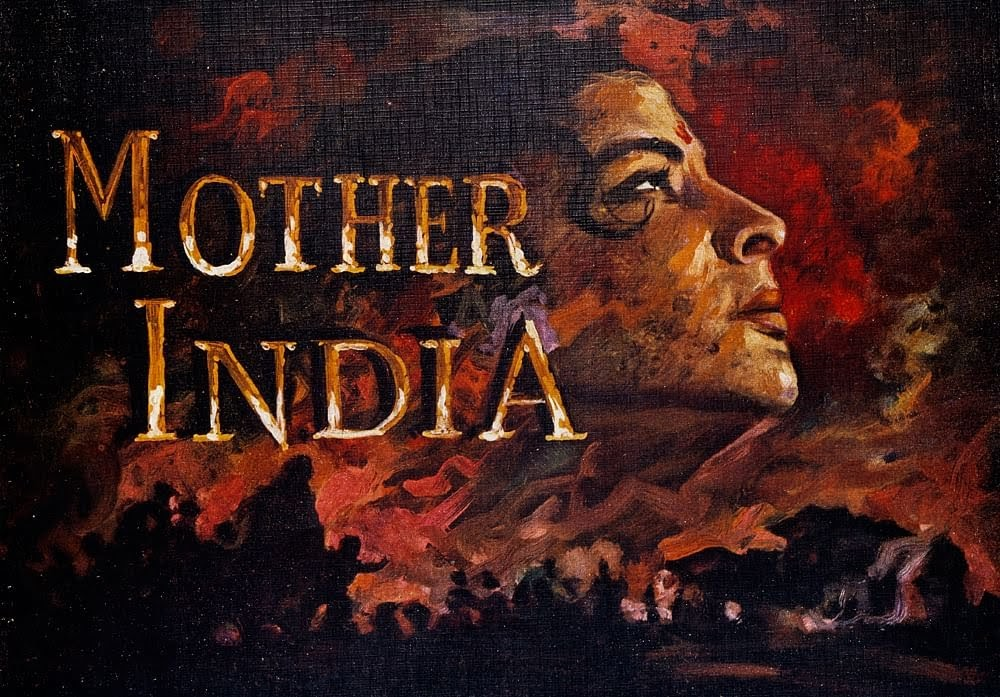
Mother India
Mother India reflected a lot on life in India post-independence. The film, in a sense, portrayed women empowerment, as the lead character is a mother who never gives up on her moral code, despite being exposed to multiple excruciating trials. With the lead characters played by Nargis and Sunil Dutt, it is an acclaimed classic.
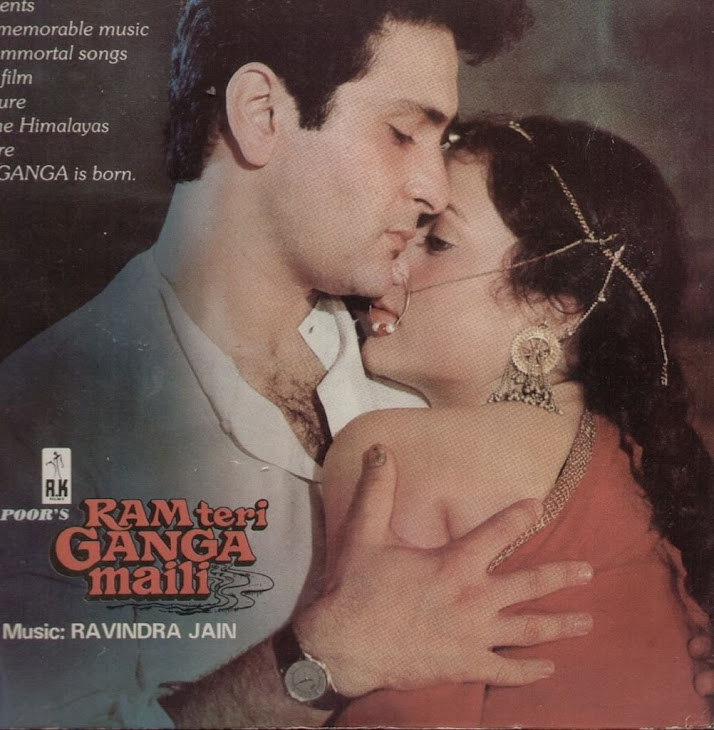
Ram teri Ganga maili
This film has a storyline similar to Pakeezah; however it does not focus on prostitution. The lead character is a girl named Ganga, and the story is about how society tries to exploit her, and succeeds. The movie showcases the harsh truth about the treatment of women in India. Like many other Raj Kapoor movies, this one too takes a socialist stance.
Do Bigha Zamin
Do Bigha Zamin was a socialist and anti-capitalist venture. It was the first film to win the Filmfare Award for Best Feature Film, and also the first Indian film to win the International Prize at the Cannes Festival. Starring Balraj Sahni and Nirupa Roy, the movie’s story is tragic and revolves around a farmer and his only means of livelihood—his two-third acres of land, or “do bigha zamin”. It depicts facets of capitalism that we – as a generation – often take for granted.
Hello :) reader 5th September is celebrated as a Teacher's Day we celebrate virtual teacher's day so in this blog I am give video link and Google Quiz link
Hello reader :) This is response task given by my teacher Dr. Dilip Barad this task is about future of Postcolonial studies and in over syllabus we have two essay by Ania loomba. In this blog i am trying to summarising both article and most important quotes and some example which discuss in class.
1) Globalization and the Future of Postcolonial Studies – Ania Loomba – Colonialism/Postcolonialism – 2nd Edition
Since the events of 11 September 2001, the so-called global war on terror,and the US invasion of Afghanistan and Iraq, it is harder than ever to seeour world as simply ‘postcolonial’. Article starts with that incident. Very important work and discuss about Empire, imperialism, market, market fundamentalism, Capitalism, Multinational company, and wast countries and East countries
Empire argues that the con-temporary global order has produced a new form of sovereignty which should be called ‘Empire’ but which is best understood in contrast toEuropean empires:bor
In contrast to imperialism, Empire establishes no territorial center of power and does not rely on fixed boundaries or barriers. It is a decen-tered and deterritorializing apparatus of rule that progressively incor-porates the entire global realm within its open, expanding frontiers.Empire manages hybrid identities, flexible hierarchies, and plural exchanges through modulating networks of command. The distinct national colors of the imperial map of the world have merged and blended in the imperial global rainbow.(Hardt and Negri 2000: xiii–xiii)
Catalogues of ‘multiple locations’ and new hybridities, new forms of communication, new foods, new clothes and new patterns of consumption are offered as evidence for both the newness and the benefits of globalisation. SimonGikandi
The new racial ideologies are not less rigid simply because they invoke culture instead of nature; rather, we see today that ‘culture can also func-tion like a nature’ and can be equally pernicious .Phobia about Arabs today, he writes, ‘carries with it an image of Islamas a “conception of the world” which is incompatible withEuropeanness’ . Thus Muslims are regarded as people who can never successfully assimilate into Western societies, or who are culturally con-ditioned to be violent, ideas that dominated the media coverage of Islamafter the attacks on the World Trade Center and the Pentagon in theUnited States on 11 September 2001.
P. Sainath observes, far from fostering ideological openness, has resulted in its own fundamentalism, which then catalyzes others in reaction:
Market fundamentalism destroys more human lives than any other simply because it cuts across all national, cultural, geographic, reli-gious and other boundaries. It’s as much at home in Moscow as inMumbai or Minnesota. A South Africa – whose advances in the early1990s thrilled the world – moved swiftly from apartheid to neo-liberal-ism. It sits as easily in Hindu, Islamic or Christian societies. And it contributes angry, despairing recruits to the armies of all religious fundamentalisms. Based on the premise that the market is the solu-tion to all the problems of the human race, it is, too, a very religious fundamentalism. It has its own Gospel: The Gospel of St. Growth, of St. Choice
…
(2001: n.p.)
The New York Times
(Friday October 17, 2003) speaking of huge demonstrations in La Pazwhich defied military barricades to protest a plan to export natural gas to the United States:
‘Globalization is just another name for submission and domination’,Nicanor Apaza, 46, an unemployed miner, said at a demonstration this week in which Indian women…carried banners denouncing theInternational Monetary Fund and demanding the president’s resigna-tion. ``We've had to live with that here for 500 years, and now we want to be our own masters.’
JosephE. Stiglitz, Nobel laureate and once Chief Economist at the WorldBank, also uses the phrase ‘market fundamentalism’ in his critique of globalisation as it has been imposed upon the world by institutions World Bank and the IMF:
The international financial institutions have pushed a particular ideol-ogy—market fundamentalism—that is both bad economics and badpolitics; it is based on premises concerning how markets work that do not hold even for developed countries, much less for developing countries. The IMF has pushed these economic policies without a broader vision of society or the role of economics within society. And It has pushed these policies in ways that have undermined emerging democracies. More generally, globalization itself has been governed in ways that are undemocratic and have been disadvantageous to developing countries, especially the poor within those countries.
So long as the American Empire dare not speak its name…today’sambitious young men and women will take one look at the prospects for post war Iraq and say with one voice, ‘Don’t even go there’.Americans need to go there. If the best and brightest insist on staying home, today’s unspoken imperial project may
This rewriting has, as we all know, begun to happen. The destructive histories of modern empires are being widely whitewashed. Thus David Cannadine’s Ornamentalism asks us to believe that there was no racism in the British Empire. Thus too George W. Bush now claims that the United States freed Filipinos instead of colonising them. Such whitewashing not only obscures, distorts and ignores anti-colonial and post-colonial scholarship but also directly attacks it. Dinesh D’Souza’s ‘Two Cheers for Colonialism’ claims that ‘apologists for terrorism’ such as Osama Bin Laden and other ‘justifications of violence’ rely on a large body of scholarship ‘which goes by the names of “anti-colonial studies,” “postcolonial studies,” or “subaltern studies”’(2002: n.p.).
Thus North Korea and India’s nuclear programmes are developed in defiance of the US, and challenge the right of a few powerful nations to dictate to the rest of the world, but nuclear proliferation can hardly be seen as progressive in any way.
The thing to understand is that modern democracy is safely premised on an almost religious acceptance of the nation state. But corporate globalization is not. Liquid capital is not. So though even capital needs the coercive powers of the nation state to put down revolts in the servants’ quarters, this setup ensures that no individual nation can oppose corporate globalization on its own. Radical change cannot and will not be negotiated by governments; it can only be enforced by people. By the public. A public who can link hands across the national borders.
(Roy 2004: n.p.)
Article end with globalization and Ecocriticism how the multinational company are making us colonized and government and other many thing slowly and steadily they are controlling by money by labour and as a name of development they are make people and animal shelterless.
The resistance to globalisation, moreover, often takes very local shape and involves struggles against national authorities, as in the case of the Narmada Bachao Andolan (NBA) in India, which has been protesting the Narmada Valley Development project to build scores of large dams across central India, dams which were not only unsustainable in themselves but which would cause the displacement of thousands of tribal peoples all across the Narmada valley. The project was funded by multinational as well as indigenous capital. Following a long and systematic struggle led by the NBA, the World Bank pulled out of the project in 1993. This left the NBA ‘face to face with the Indian state’
(Palit 2003: 88). Finally, it was the Indian Supreme Court which ruled that construction of the dams would continue.
A nexus between politician and businessman vs young college boys (one them has to murder his own father who was corrupt businessman before murdering the politician)
Film is about king and their and british colonialism in India protagonist Bhuvan accept challenged of Cricket Match and they win as a winner their free to not pay Tex to British Government.
Shamshera movie also related with trible poeple and their sturrgle also it was related with elite class in India Dalit literature is also against with elite narration and it can ralate with subaltern studies and Marginilized poeple.
This movie is again conflict with power politian and common people and also connected with private hospital and their stategies and corruption in India.
This movie conflict between market fundamentalism and religious fundamentalism in the aftermath of 9/11 and fight of multination company and their Hire/fire also their stategies on profit not in humanity. Pakistani Youngman work in US. And one more thing I observe in movie is that every Muslims are not terrorist basically who are from Islamic countries wester always seen them as their envolve in torrerist activities.
Gayatri Chakravorty Spivak, claim they ‘no longer have a postcolonial perspective. I think postcolonial is the day before yesterday’ (Spivak 2013: 2)
Dipesh Chakrabarty finds that all his ‘readings in theories of globalization, Marxist analysis of
capital, subaltern studies, and postcolonial criticism over the last twenty-five years’ have not prepared him for the task of analyzing the ‘planetary crisis of climate change’ (2009: 199).
In this article post colonial aspects turn towards the environment. There are many thinkers, writers, and critics writing about that and our present situation.
Ramachandra Guha and JuanMartínez-Alier (1997) point out, is evident in American environmentalism and its obsession with the wilderness. Rob Nixon further notes that this wilderness obsession is celebrated in American literature as well as in natural history, where ‘There is a durable tradition … of erasing the history of colonized peoples through the myth of the empty lands. … a prodigious amount of American environmental writing and criticism.
that from its inception [there is] a prevailing version of postcolonial studies in the United States that so embraces its aura of ‘new work’ and its dual allegiances to high theory and a rather reified, distanced, and monolithic ‘Third World literature’ that it largely estranges itself from the individual and collection histories of several important allied traditions such as American studies, Native-American studies, African-American studies, Asian-American studies, Latino studies, and Gay and Lesbian studies.
(Cooppan 1999: 7)
Native Americans or African-Americans, however disenfranchised, are citizens of the most powerful nation-state in the world; on the other hand, at least within the United States,
many immigrants from the third world are either from relatively well-off sections of society, or even when not, have participated in what Toni Morrison has called a ‘most enduring and efficient rite of passage into American culture: negative appraisals of the native born black population’ (Morrison: 1993, 57)
In The Accumulation of Capital, Rosa Luxemburg suggested the need to revise Marx; she argued that Marx visualised capitalism as a closed system, sufficient in itself.
Its predominant methods are colonial policy, an international loan system, a policy of spheres of interest—and war. Force, fraud, oppression, looting are openly displayed without any attempt at concealment,and it requires an effort to discover within this tangle of political violence and contests of power the stern laws of the economic process.
(1951: 452)
It also needs to encroach on spaces, workers, and goods (or ‘productive forces’) that lie outside its purview:
Capital, impelled to appropriate productive forces for purposes of exploitation, ransacks the whole world, it procures its means of production from all corners of the earth, seizing them, if necessary by force, from all levels of civilization and all forms of society.
(358)
Capitalism’s central dynamic, the constant search for markets,resources and labour, thus involves the ongoing need to draw in
whatever still remains open of the non-capitalist environment.
(446)
Luxemburg’s ideas remain important today for two reasons.Firstly, she alerts us to the deep historical connections between trade and colonialism (Amitav Ghosh’s recent book, The River of Smoke offers a deeply compelling fictional account of this process by looking at the opium trade and wars in China). Secondly, she reminds us that accumulation is a constant process rather than a past event; even if there are no spaces neatly outside capitalism, there are differentially ‘developed’ areas, and areas
where there may be remnants of the commons, still open for enclosure.
David Harvey suggests that we redefine ‘primitive accumulation’ as ‘accumulation by dispossession’ (2005: 144). Harvey points out that
All the features of primitive accumulation that Marx mentions have remained powerfully present with capitalism’s historical geography until now. Displacement of peasant populations and the formation of a landless proletariat has accelerated in countries such as Mexico and India in the last three decades, many formerly common property resources, such as water, have been privatised (often at World Bank insistence) … alternative (indigenous and even, in the case of the United States, petty commodity) forms of production and consumption have been suppressed. Nationalised industries have been privatised.Family farming has been taken over by agribusiness. And slavery has not disappeared (particularly in the sex trade).(Harvey 2005: 145–46)
Michelle Alexander in a powerful book called The New Jim Crow: Mass Incarceration in the Age of Colorblindess (2012)
We need to interrogate not just the symptoms of inequality—the disproportionate loss of jobs, housing, healthcare and more—but, more fundamentally, the systems of inequality, considering how and why corporations create and exploit hierarchies of race, gender and national status to enrich themselves and consolidate their power.
They are now ‘the main determinant of the environment of the planet’, ushering in ‘a new geological age’ that can be called the Anthropocene (2009: 208–9). Chakrabarty concedes that
Climate change, refracted through global capital, will no doubt accentuate the logic of inequality that runs through the rule of capital;some people will no doubt gain temporarily at the expense of others.But the whole crisis cannot be reduced to a story of capitalism. Unlike in the crises of capitalism, there are no lifeboats here for the rich and the privileged (witness the drought in Australia or recent fires in the wealthy neighborhoods of California).
(Chakrabarty 2009: 221)
Ian Baucom observes that a ‘new universalism: the universalism of species thinking’ is being proposed here (2012: 9).
‘open’ spaces in which the activity of European nations proceeded unrestrained: first, an immeasurable space of free land—the New World, America, the land of freedom i.e., land free for appropriation by Europeans—where the ‘old’ law was not in force; and second, the free sea—the newly discovered oceans conceived by the French,Dutch and English to be a realm of freedom.(Schmitt 2003: 94)
So now it is time to think about ecology. It is about displacement. Humans become greedy and they constantly harm ecology. So in post colonial studies there is one concern about displacement and here is something about this term. So what is displacement ?
“It is about losing a river. Losing access to clean, safe, drinking water…losing land that is watered richly…losing the grass that your herds grazed on. Losing your cattle. Losing the milk that came from your cattle…losing honey and herbs…losing the right to protest when somebody in a uniform shows up to set fire to your home. What else was left to lose?”
This movie discusses how one tiger is stuck between that place where industrial development was grown up. The story goes like this tiger became the talk of town and politicians use this for upcoming elections. One forest officer called Vidhya tries to save a tiger and send them to a zoo and one professor helped her and at the climax of the movie we found that at the middle there is a mill. Tiger is not able to across it and that’s why she stuck.
Chakravyuh (transl. Wheel formation more idiomatically puzzle) is a 2012 Indian Hindi-language political action thriller film directed by Prakash Jha starring Arjun Rampal in the lead role with Abhay Deol, Esha Gupta, Manoj Bajpayee and Anjali Patil in supporting roles. Chakravyuh aims to be a social commentary on the issue of Naxalites. The first theatrical trailer of Chakravyuh was released at midnight on 16–17 August 2012. The film was released on Durga Puja.Chakravyuh released in 1100 cinemas in India. Despite being well-praised, the movie failed to attract an audience.
“Tatvamasi” by Dhruv Bhatt.
When the book was written that time the NBD took a place. Dhruv Bhatt in his novel keeps silent about Narmada Bachao Andolan. It is one kind of escape from contemporary movement. It has also film adaptation but also producer did not mention about NBA author can speak about whatever wrong in society or at least somewhere mention that in small event or by small incident but writers are behave like Wordsworth they only speak about beauty of nature and live in urban they appreciate country but their not connected with the life or it can say hard life of people who live in country.
Chardham Yatra Project
This project concerns the harm of the environment. Building roads in mountains is harmful not only for the environment but also for humans who travel across the road. Animals, Birds they are shelterless and many other changes in Nature.
SO these all are points which concern postcolonial studies. Now we have to think about ecology. Humans have only one house to live in and that is Earth.




.jpg)
.jpg)

.jpg)


